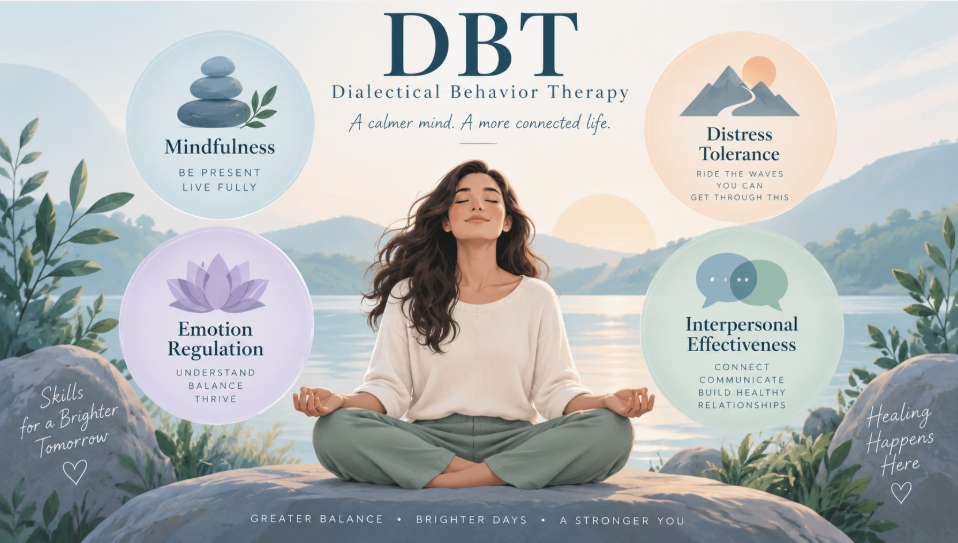
Life can sometimes feel overwhelming. We all experience difficult emotions such as sadness, anger, fear, anxiety, and frustration. While these feelings are a normal part of life, managing them can be challenging, especially when they become intense or affect our daily activities and relationships.
Dialectical Behavior Therapy (DBT) is a type of psychotherapy that helps individuals understand their emotions, develop healthy coping strategies, and improve their relationships. It combines two important ideas: accepting yourself and your feelings while also working toward positive changes in your behavior.
DBT teaches practical skills that people can use in everyday life to respond to difficult situations more effectively and build greater emotional balance.
onyourmindglos.nhs.uk
+1
What Is Dialectical Behavior Therapy (DBT)?
Dialectical Behavior Therapy was originally developed to help individuals experiencing severe emotional difficulties and self-harming behaviors. Today, it is also used in different mental health treatment settings to support people who struggle with intense emotions and unhealthy coping patterns.
The word "dialectical" refers to bringing together two ideas that may seem opposite: acceptance and change.
For example, a person can accept that they are feeling angry while also choosing not to react in a harmful way.
DBT helps people understand that emotions are valid, but they still have choices about how to respond to them.
Borderline personality disorder
+1
The therapy focuses on four main skills:
Mindfulness
Distress Tolerance
Emotion Regulation
Interpersonal Effectiveness
These skills work together to help individuals handle emotional challenges, improve communication, and make healthier decisions.
Understanding DBT (Dialectical Behavior Therapy): A Path to Emotional Balance and Better Mental Health
Dialectical Behavior Therapy (DBT) is a practical approach to mental health that helps people manage difficult emotions, reduce stress, improve relationships, and develop healthier coping skills. This blog explores the four core skills of DBT: mindfulness, distress tolerance, emotion regulation, and interpersonal effectiveness. It explains how these skills can help individuals handle everyday challenges and build a more balanced and fulfilling life.